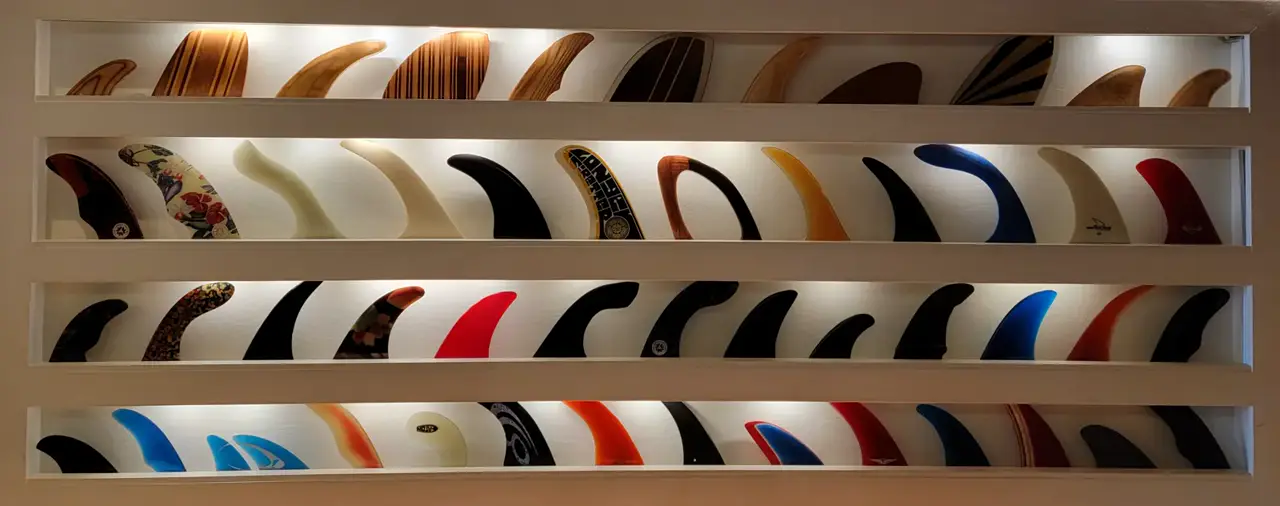
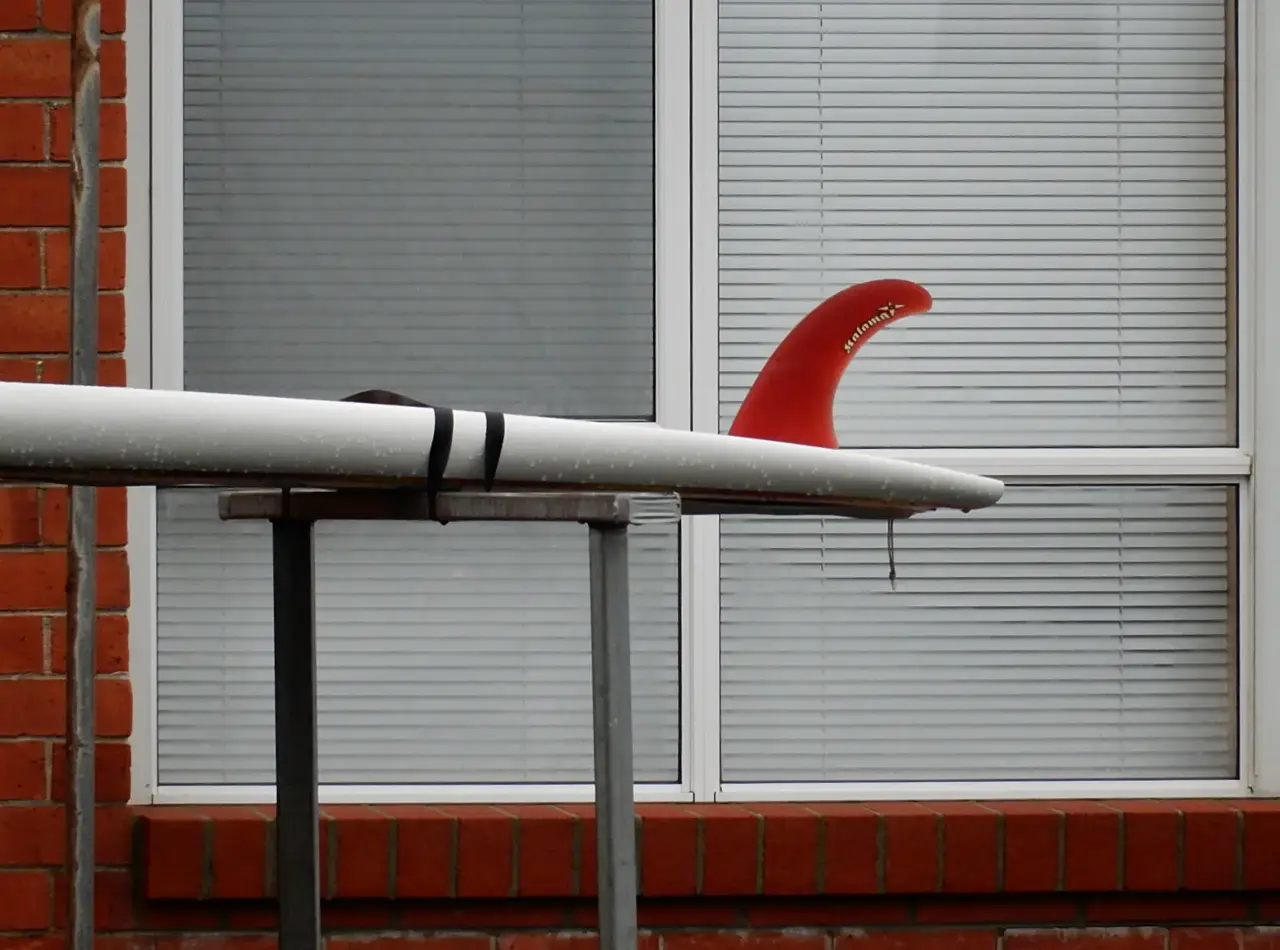
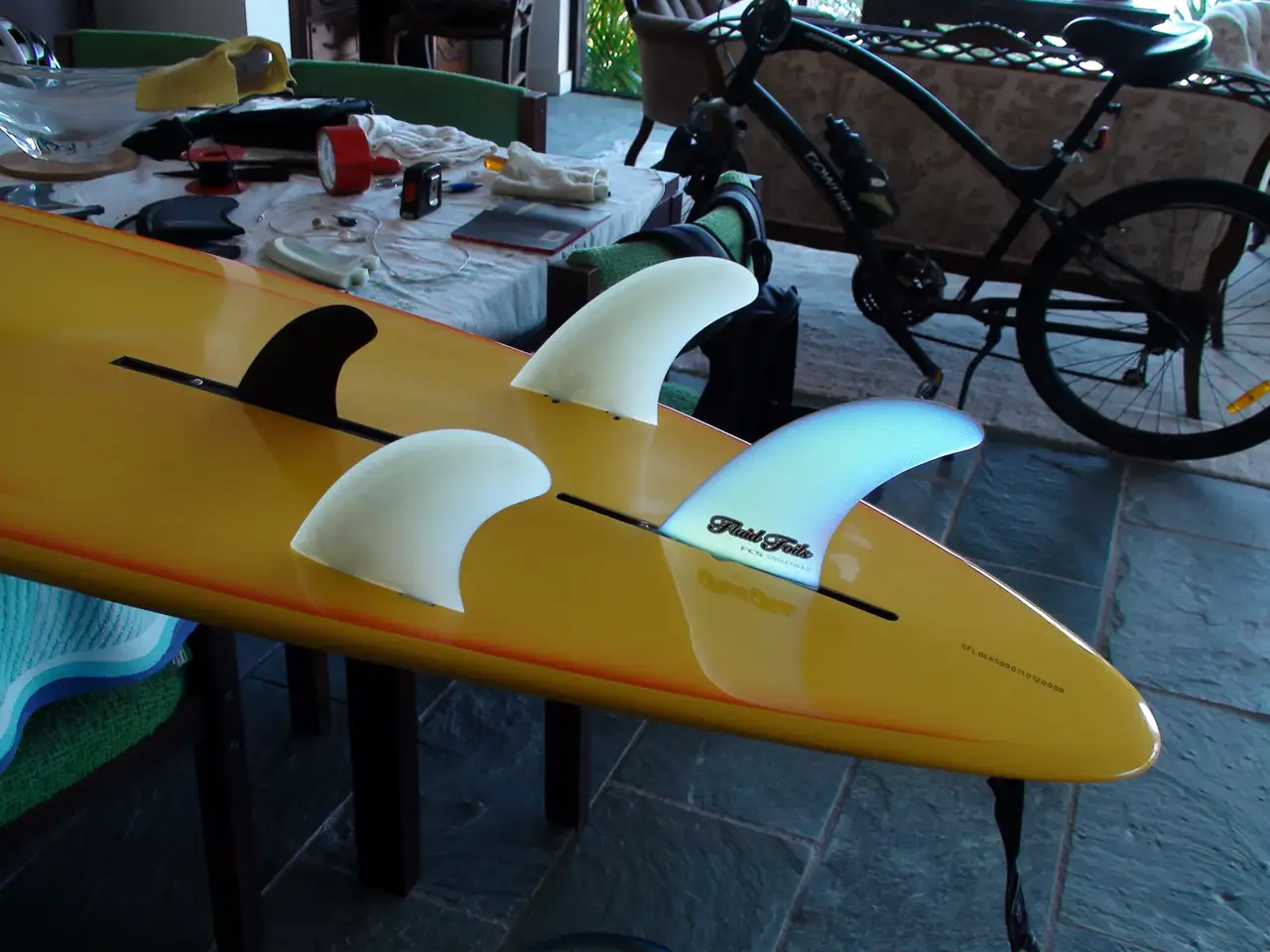
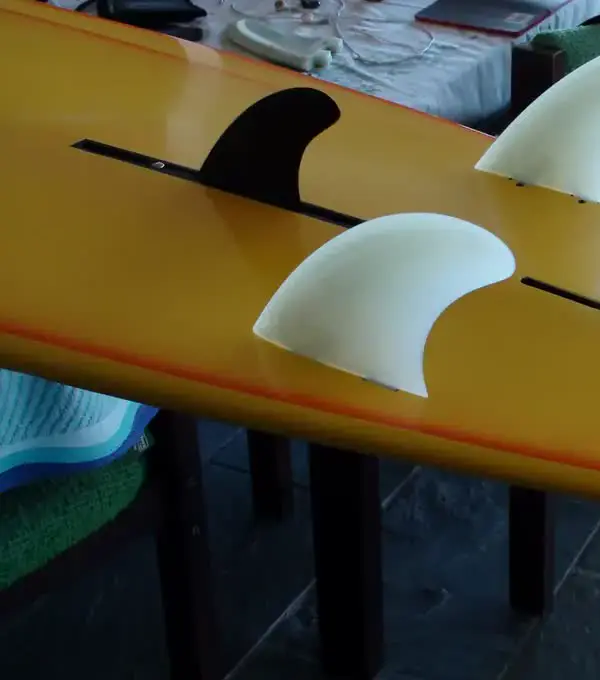
A wall of surfboard fins in different templates

Fin systems and hydrodynamics

Surfboard fin systems guide

Fins are the steering wheel of your board. Check your fin boxes, pick a template and you are set.

Best fins by system

1Best for Futures
Surfboard fins on the tail of a yellow boardFutures F8 Honeycomb Thruster Fins

The everyday thruster set for Futures boards.

Check price on Amazon
2Best for FCS II
A surfboard fin close upFCS II Performer Tri Fin Set

The everyday thruster set for FCS II boards.

Check price on Amazon
3Best for drive
A set of fins on a surfboard tailFCS II Accelerator PC Tri Fins

The step-up set when you want more drive.

See it on Amazon

Fin box systems

Single Tab System

Futures

Industry-leading single-tab system known for secure lockdown and minimal hardware. Used by many pro surfers.

Pros
  • Single screw - quick install
  • Very secure lockdown
  • Minimal flex at base
  • Wide fin selection
Cons
  • Proprietary system
  • Not compatible with FCS

Install: Easy

Keyless Click-In

FCS II

Revolutionary keyless system allowing tool-free fin changes in seconds. Perfect for traveling surfers.

Pros
  • No tools required
  • Quick fin swaps
  • Click-in design
  • Backwards compatible
Cons
  • Can pop out in heavy surf
  • Slightly more play than screwed systems

Install: Easiest

Dual Tab Classic

FCS (Original)

The original modular fin system that revolutionized surfboard design. Still widely used and trusted.

Pros
  • Time-tested design
  • Very secure with screws
  • Huge fin library
  • Reliable
Cons
  • Two screws per fin
  • Grub screws can strip
  • Slower to change

Install: Moderate

Universal Longboard Standard

US Box

The universal standard for longboards and single fins. Simple, adjustable, and time-proven.

Pros
  • Universal compatibility
  • Fin position adjustable
  • Very strong
  • Easy to find fins
Cons
  • Single fin only
  • Heavier than other systems
  • Less performance-oriented

Install: Easy

Fin theory

Base Width

The length of the fin where it connects to the board.

Wider base = more drive and acceleration. Narrower = quicker pivot.

Height / Depth

How far the fin extends into the water.

Taller fins = more hold and control. Shorter = looser feel, easier to release.

Rake / Sweep

The angle of the fin tip relative to the base.

More rake = longer drawn-out turns. Less rake = tighter pivot radius.

Flex Pattern

How much the fin bends under pressure.

Stiffer = direct power transfer, more control. Flexy = forgiving, generates speed.

Fin configurations

Single Fin

Best for: Longboards, Mid-lengths, Classic style

Feel: Smooth, flowing, connected to wave. Classic glide with drawn-out turns.

Twin Fin

Best for: Fish boards, Small waves, Retro shapes

Feel: Fast, loose, skatey. Quick rail-to-rail transitions, less hold in steep faces.

Thruster

Best for: Performance boards, All-around, Competition

Feel: Balanced, controlled, versatile. The standard for performance surfing.

Quad

Best for: Hollow waves, Speed generation, Barrels

Feel: Maximum speed and drive. Great hold but different turning feel than thruster.

2+1

Best for: Mid-lengths, Versatile setups, Transitioning surfers

Feel: Best of both worlds. Can remove side bites for single fin feel, or use all three.

Frequently asked questions

What is the difference between Futures and FCS fins?

Futures uses a single-tab system with one screw for secure lockdown. FCS II uses a keyless click-in design for tool-free fin changes. Both are high-quality systems with different trade-offs.

What fin setup is best for beginners?

A thruster (3-fin) setup is best for beginners as it provides balanced control, hold, and maneuverability for all-around surfing.

How do I choose the right fin size?

Fin size is based on your weight. Most manufacturers provide sizing charts. Generally, lighter surfers use smaller fins and heavier surfers use larger fins.

Fin and tail gear

Surfboard fins on the tail of a yellow board

Futures

Futures F8 Honeycomb Thruster Fins

Futures' medium all-round thruster template. Honeycomb construction keeps it lighter than a solid fiberglass fin of the same outline.

Pros
  • All-round medium template
  • Light honeycomb build
  • Secure single-tab base
Cons
  • Futures boxes only

Verdict: The everyday thruster set for Futures boards.

Check price on Amazon
A surfboard fin close up

FCS

FCS II Performer Tri Fin Set

FCS's all-round thruster template with tool-free FCS II install. The medium covers most everyday boards.

Pros
  • Tool-free install
  • Balanced all-round template
Cons
  • FCS II plugs only

Verdict: The everyday thruster set for FCS II boards.

Check price on Amazon
A set of fins on a surfboard tail

FCS

FCS II Accelerator PC Tri Fins

FCS's drive-focused template in Performance Core construction. A popular step up for faster, more powerful surfing.

Pros
  • Drive and speed
  • Performance Core flex
  • FCS II tool-free
Cons
  • Pricier than the Performer
  • FCS II plugs only

Verdict: The step-up set when you want more drive.

See it on Amazon
Three-piece tail traction pad with an arch

Dakine

Dakine Andy Irons Pro Traction Pad

A three-piece tail pad with an arch for the back foot. It locks the rear foot in place and stops heel dents.

Pros
  • Arch bar for the back foot
  • Pronounced kick tail
  • Covers the full tail
Cons
  • One-shot adhesive
  • Not needed on a soft top

Verdict: The performance pick for hard shortboards.

Check price on Amazon
Flat three-piece traction pad illustration

Dakine

Dakine Launch Traction Pad

A simpler three-piece pad with a flatter kick. Good grip without the aggressive feel of a pro pad.

Pros
  • Basic, reliable grip
  • Flatter, easy-going kick
Cons
  • Less arch support

Verdict: A sensible first tail pad.

Check price on Amazon