Surfboard anatomy
Surfboard anatomy guide
Every curve has a purpose. Learn what the nose, tail, rails, rocker and bottom contours do, so you can choose a better board.
Put it into practice
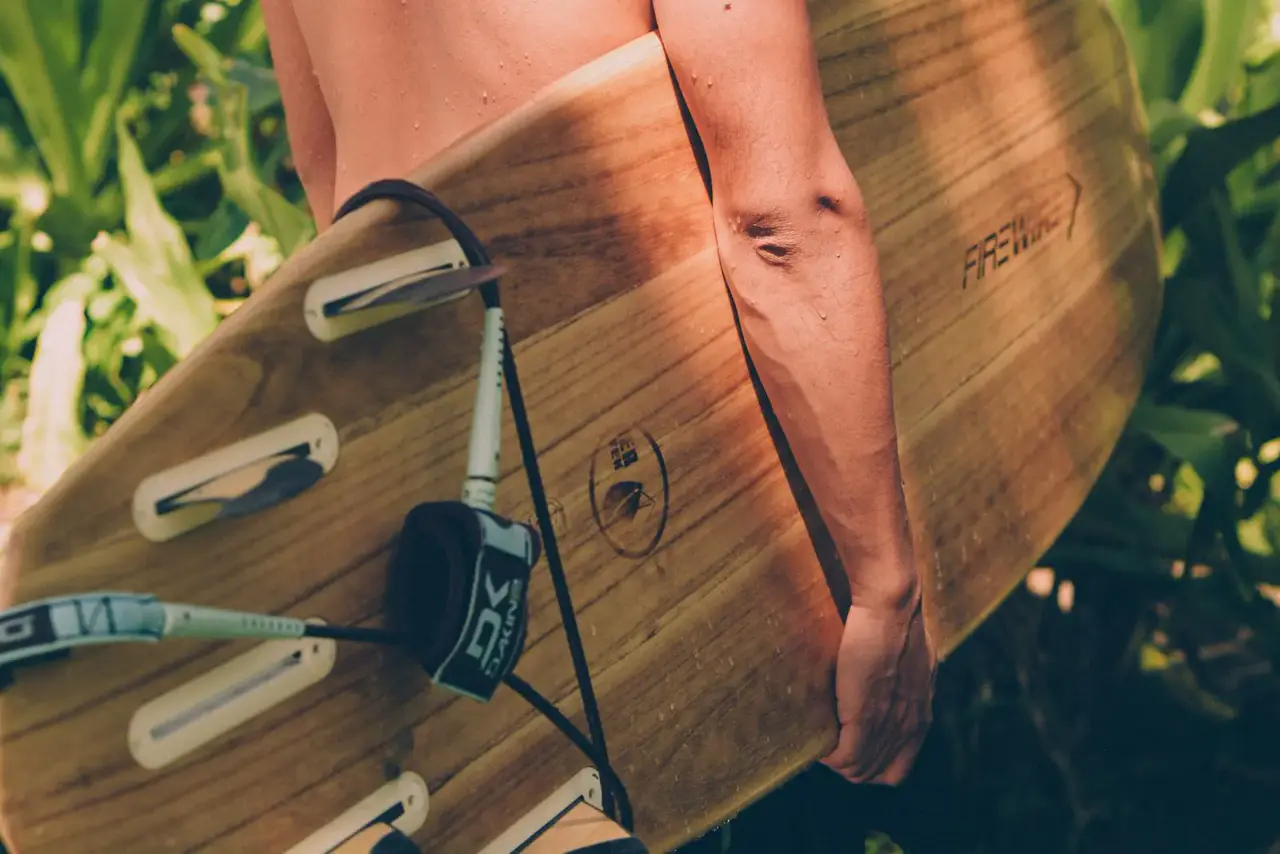
 Wavestorm Classic 8ft Soft Top Surfboard
The safest first board for most adults in small waves.
Check price on Amazon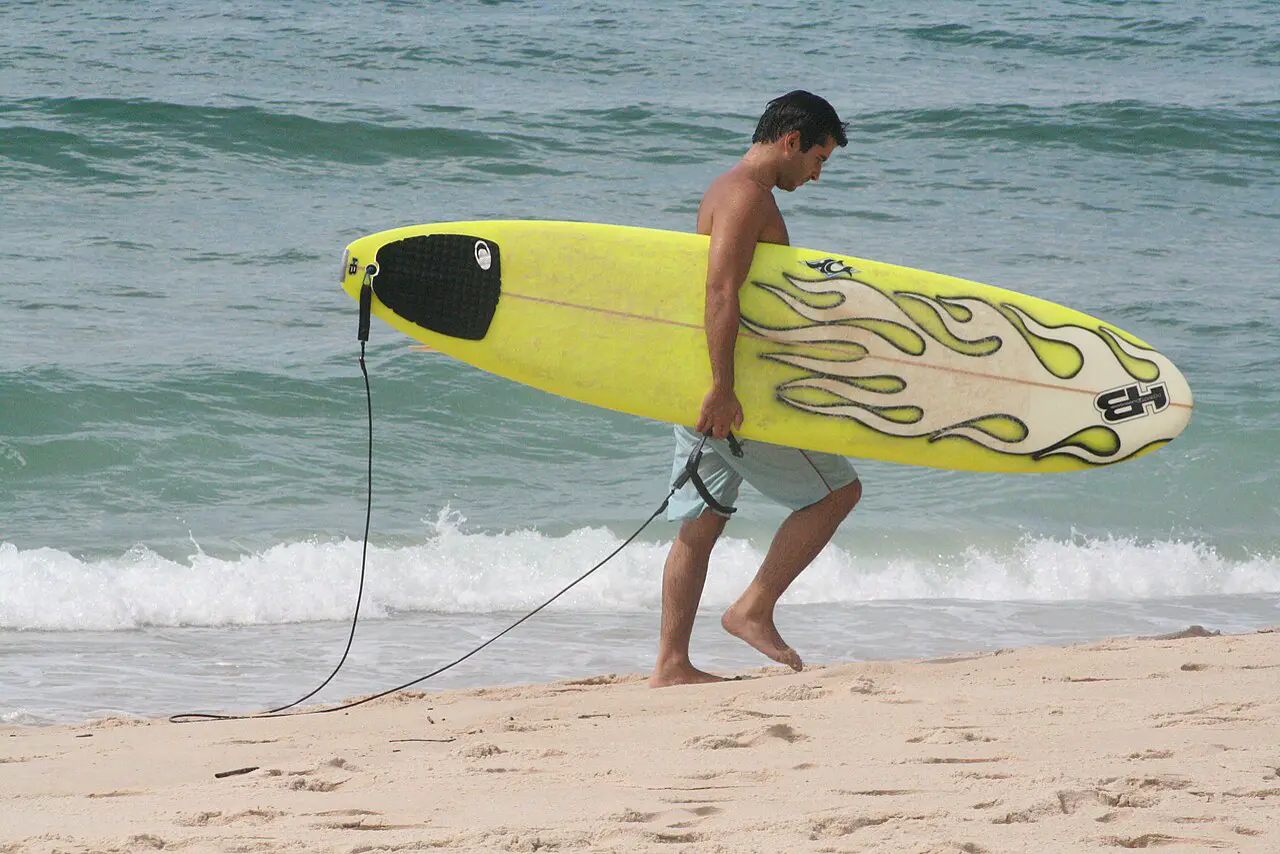 Catch Surf Odysea Log 8'0" Soft Top
The soft top you keep after you learn. Worth it if you surf every week.
See it on Amazon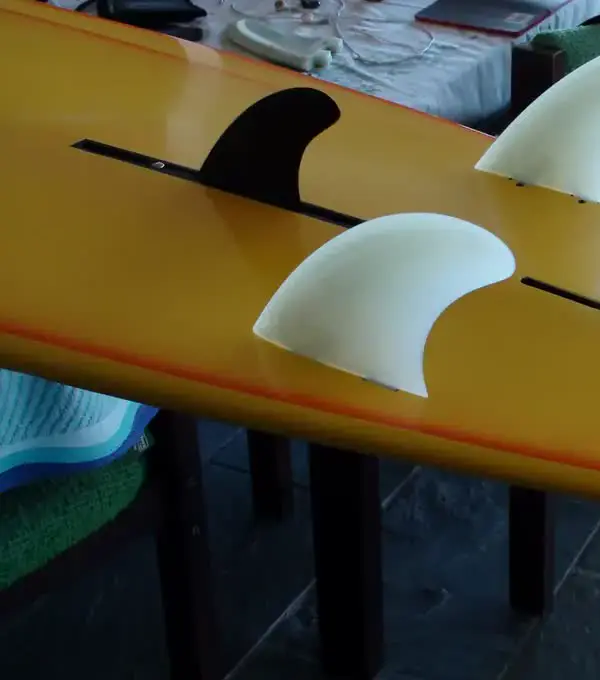 Futures F8 Honeycomb Thruster Fins
The everyday thruster set for Futures boards.
Check price on AmazonParts of a surfboard
Tap any part to see what it changes in the water.
Nose
The front tip of the board that enters the water first.
Shape Elements
Nose
The front tip of the board that enters the water first.
Shape Elements
The nose shape dramatically affects how the board paddles into waves and performs on the face. Pointed noses slice through water for duck diving and late takeoffs. Round/wide noses add paddle power and glide, ideal for small waves and beginners.
What it affects
- Paddle speed
- Duck diving
- Late takeoffs
- Nose riding
Common mistakes
- Choosing too narrow a nose as a beginner (harder to paddle)
- Not protecting the nose during transport (most common damage point)
Tail
The back of the board that releases water and controls turning.
Shape Elements
Tail
The back of the board that releases water and controls turning.
Shape Elements
The tail is your steering mechanism. Width, shape, and rocker here determine how the board holds in turns, releases off the top, and generates speed. Common shapes include squash (balanced), round (smooth), swallow (speed), pin (control), and square (pivot).
What it affects
- Turning radius
- Hold in steep waves
- Speed generation
- Release off lip
Common mistakes
- Choosing a narrow pin tail for small waves (too much hold, not enough speed)
- Wide squash tail in hollow waves (too loose, not enough control)
Rails
The edges of the board that slice through the water.
Shape Elements
Rails
The edges of the board that slice through the water.
Shape Elements
Rails are the unsung heroes of board design. They control how the board sits in the water, how it transitions from rail to rail, and how much grip vs. release you get. Full/boxy rails float higher and forgive mistakes. Thin/knifey rails sink in and respond to subtle input.
What it affects
- Buoyancy
- Rail-to-rail transitions
- Wave face grip
- Forgiveness
Common mistakes
- Advanced rails on a beginner board (unforgiving, hard to control)
- Not understanding that rail shape varies from nose to tail
Rocker
The curve of the board from nose to tail when viewed from the side.
Shape Elements
Rocker
The curve of the board from nose to tail when viewed from the side.
Shape Elements
Rocker is the banana curve of your board. More rocker = tighter turns and better performance in steep/hollow waves but slower paddling. Less rocker = faster down the line, easier paddling, but tighter turns become harder. Entry rocker (nose) affects paddling; exit rocker (tail) affects turning.
What it affects
- Paddle speed
- Turning ability
- Performance in hollow waves
- Planing speed
Common mistakes
- Too much rocker for your skill level (hard to generate speed)
- Flat rocker in hollow waves (pearling, difficult takeoffs)
Concave
Channels carved into the bottom that direct water flow.
Surface Features
Concave
Channels carved into the bottom that direct water flow.
Surface Features
Concave creates lift and speed by channeling water efficiently under the board. Single concave provides smooth speed. Double concave adds looseness and rail-to-rail flow. Vee breaks up water for easier rail transitions. Most performance boards blend these through different sections.
What it affects
- Speed generation
- Lift
- Rail-to-rail transitions
- Water release
Common mistakes
- Not understanding concave blends (most boards use multiple types)
- Expecting concave to fix fundamental shape issues
Stringer
The wooden strip running down the center of traditional boards.
Components
Stringer
The wooden strip running down the center of traditional boards.
Components
The stringer provides longitudinal strength and affects flex. Thicker stringers = stiffer boards. Some modern boards use carbon strips or go stringerless for different flex patterns. The stringer also helps prevent the board from snapping.
What it affects
- Flex pattern
- Durability
- Weight
- Response
Common mistakes
- Ignoring stringer condition when buying used boards (check for cracks)
- Not understanding stringerless EPS boards have different flex
Fin System
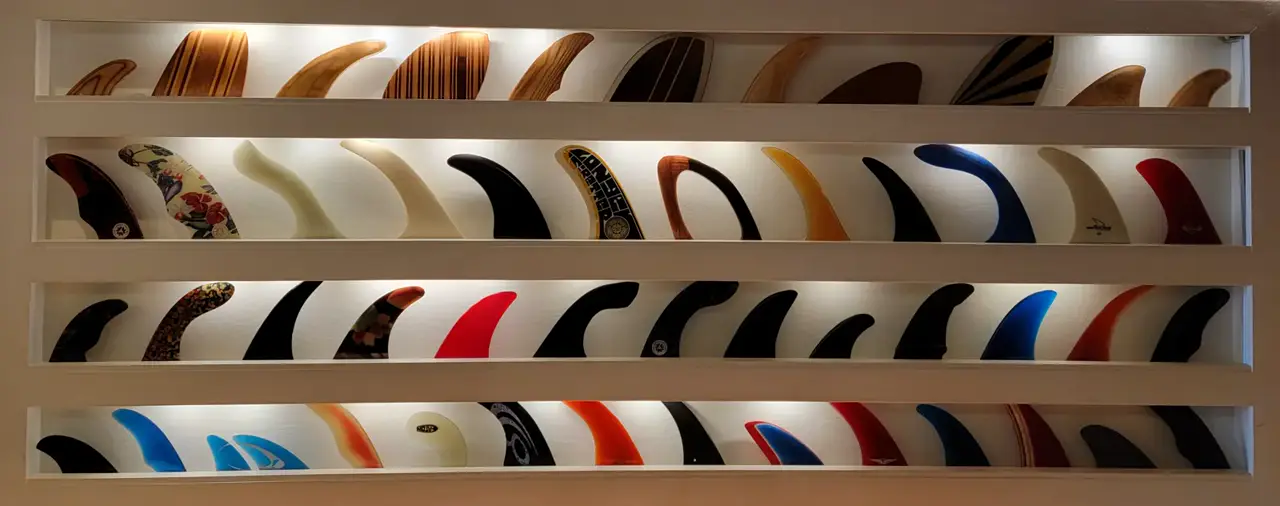
Removable fins that provide direction, hold, and drive.
Components
Fin System
Removable fins that provide direction, hold, and drive.
Components
Fins are your steering wheel. The fin system (Futures, FCS, etc.) determines which fins you can use. The configuration (single, twin, thruster, quad) dramatically changes how the board surfs. Fin placement and cant/toe angles are set by the shaper.
What it affects
- Turning
- Hold
- Speed
- Drive
Common mistakes
- Wrong fin size for your weight
- Not experimenting with different fin templates
Deck
The top surface where you stand.
Surface Features
Deck
The top surface where you stand.
Surface Features
Deck shape affects comfort, volume distribution, and control. Domed decks shed water and feel narrower underfoot. Flat decks maximize volume but can feel corky. Most boards have subtle dome that transitions to flatter rails.
What it affects
- Foot comfort
- Volume distribution
- Duck diving
- Rail engagement
Common mistakes
- Waxing only where you think you'll stand (wax the whole deck)
- Not checking deck condition on used boards (pressure dings matter)
Outline
The template shape when viewed from above.
Shape Elements
Outline
The template shape when viewed from above.
Shape Elements
Outline determines the board's planning surface and how it flows through turns. Wide point forward = stable, easier paddling. Wide point back = faster, more maneuverable. Parallel outlines maintain speed; curved outlines arc smoothly.
What it affects
- Stability
- Paddle power
- Turn arc
- Speed maintenance
Common mistakes
- Judging a board only by length (outline matters just as much)
- Not considering wide point placement for your surf style
Foil / Thickness Flow
How thickness is distributed from nose to tail.
Shape Elements
Foil / Thickness Flow
How thickness is distributed from nose to tail.
Shape Elements
Foil describes where the board carries its volume. Thicker nose = easier paddling. Thicker tail = more lift and speed. Most performance boards thin toward the tail for sensitivity. The foil affects how the board feels underfoot through turns.
What it affects
- Paddle balance
- Sensitivity
- Speed
- Turn feel
Common mistakes
- Not understanding that two boards with same volume can feel very different
- Ignoring foil when comparing boards